Strategy has never been talked about so much. And it has never been seen so little.

The difference between intention and strategy appears when the environment applies pressure, but the company does not sustain its plan.
The word became popular. It gained space in meetings, presentations, job descriptions, LinkedIn posts and leadership speeches. Everything became strategy. An isolated action became strategic. A tactical adjustment became strategic. A hurried reaction to the market became strategic. Haste itself, in many contexts, began to dress up as sophistication. But when everything is strategy, what is not? How do we understand what the long-term direction is within an increasingly obtuse concept?
For some time now, strategy has stopped being treated as a field of high complexity and has come to be used as a corporate buzzword, spread as something easily accessible and replicable. Ironically, what intrigues me most about the trivialization of the word is the realization that, often, it works as a smokescreen for the absence of a real strategy.
It is as if calling things strategic made them denser and more important. As if every relevant decision were automatically strategic, as if reacting quickly were the same as sustaining direction. The confusion is so great that, even when the direction exists, it is obscured by a dangerous distortion: the substitution of strategy as a discipline by strategy as discourse.
Being is different from seeming: true strategy is the one that sustains decisions
There is an observable tension in this context: on one side, strategy as rhetoric; on the other, strategy as coherence sustained over time. As if one were the protagonist and the other a stunt double for effect scenes, sometimes quite risky ones. In some moments, recognizing them can be easy, but in others, appearances deceive.
Strategy is not what impresses during the presentation. It is not the pretty slide, the special effect, the mere narrative adjusted to the brand. It does not reveal itself at the moment of formulation, but in the consistency of the decisions that follow.
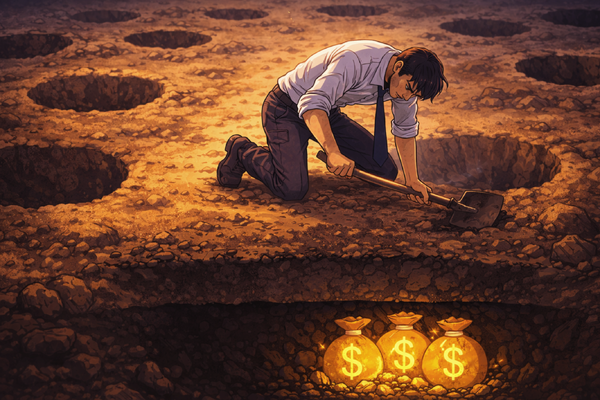
Strategy is the ability to sustain a direction over time, even when the environment pressures for changes.
Strategic guidelines require reading the scenario, sensitivity, breadth of vision and, above all, the capacity for permanence. It is not enough to create a direction in a moment of clarity. You have to maintain it when the wind changes, when the temperature rises, when noise, crises, opportunities and temptations arise.

There is a rarely addressed point when it comes to strategy: emotional sustainment. Deciding a path is relatively simple. Sustaining that path when doubts, pressures and seemingly better alternatives arise requires emotional maturity. Emotional intelligence, in this context, is not a soft skill. It is a strategic discipline. Without it, any well-defined direction becomes vulnerable at the first sign of discomfort.
There is yet another mechanism at work: the pressure to appear sophisticated. Many leaders have come to call strategic what, deep down, serves more the need to seem intelligent than the need to build coherence. Not by chance, we live in an era in which frameworks replace thinking, jargon replaces understanding and speed replaces maturity.
This also appears in the way the market has come to deal with fads. There is a permanent eagerness to seem up to date, adaptable, modern, technological. Only that updating does not replace depth. Without reading contexts, adhering to new tools may be just one more kick out of bounds on the ball of the moment. Instrumental intelligence definitely should not be confused with strategic intelligence.
At what point does adaptation stop being intelligence… and become just well-presented anxiety?
Tactics, reaction and movement are not strategy.
A recurring confusion within companies happens between tactics and strategy. Tactics have to do with the maneuver, the adjustment, the way execution organizes itself on the terrain. Strategy, however, is above that: it contains the tactics, the operational, the processes, the priorities and the rationale that sustain the whole. This does not mean blind rigidity, but intelligent continuity.
Tactics can change. Strategy cannot. It cannot be abandoned with each oscillation, change of algorithm, market noise or movement of the Stock Exchange. It cannot fall with each new trend that promises shortcuts and miraculous results.
Today, however, what is seen in many companies is exactly the opposite. Organizations operate like ping-pong, changing direction based on immediate stimuli, calling a plan what is merely a reaction. Only that reacting is not necessarily thinking. Adjusting is not necessarily preserving. Being in motion is not the same as having direction. Decisions without structure are just sequences of actions with no use when disconnected from consequence, continuity and criteria.
In many companies, what is called strategy is already just instinct trying to look like sophistication.

Every strategy can be improved, refined and deepened. It works like a compass on the open sea. It is not the map drawn before the voyage that guarantees the course, but the ability to keep it when the wind changes, when the current is against you and when the horizon is a fog. That is when you discover whether there was direction or just intention.
More than putting out the fire, preserving the whole forest
There are common decisions and there are strategic decisions. While the first type solves the immediate problem, the second resolves the crisis without losing sight of the destination, considering context, impact and continuity.
Strategic decisions do not look only at the fire of the moment, but at what needs to live or be rebuilt after that. While emotional leadership rushes to put out the nearest fire, strategy is concerned with preserving as much of the forest as possible. It is not enough to control the source, but to ensure that the fire does not spread and does not eradicate the ecosystem.
This also applies to opportunities. Not every opportunity is valid, not every shortcut pays off, not every quick gain preserves the destination. What today seems like a great solution may be just a mirage, or even a punctual gain that disorganizes the whole. A seductive detour that delivers immediate results, but weakens coherence, culture and consistency.
Strategy requires this kind of maturity: the ability to say no also to what seems good, but compromises what needs to be sustained. In the words of Peter Drucker, the father of modern management, “there is nothing so useless as doing efficiently that which should not be done at all.”
When strategy fails, culture feels it first
The deepest effect of false strategy does not appear first in the market, but inside the company. When direction changes all the time, when everything is a priority, when any noise generates a new “strategy”, people lose visibility, trust and belonging. They remain present, but they begin to distance themselves inside. They think, but stop speaking. They perceive, but stop contributing. Not because they lost capacity, but because they lost reference.
Entire teams absorb the abrupt change of route, the constant recalculating, the poorly done communication, the coldness of someone who changes direction without sustaining meaning. When people realize that leadership no longer sustains what it said yesterday, the bond weakens. And then, we already know: without trust, there is no alignment. Without alignment, there is no culture. Without culture, the collective effort loses power.
This is a silent and dangerous symptom.
Execution loses coherence. Culture fragments. Decisions lose quality. And the organization starts to believe it is being strategic, when, in practice, it is just organizing actions. Strategy, then, ceases to be structure and becomes just a well-articulated narrative, one that does not go very far on its own.
Many strategies die in a single poorly made decision.
Companies do not get lost because they did not start with strategy, but because they lose their bearings, including through impulse or extreme emotions. This happens because of poorly calibrated ambition, acceleration without foundation, expansion without sustainment, dazzlement with rapid growth, pressure for immediate results or simply the absence of someone who keeps thinking about the whole when everything starts to dilute.
The chair of the strategy director, a true protector against emotional decisions, has practically disappeared in many contexts. This agent has precisely the role of qualifying, connecting, decelerating the impulse when the impulse threatens to break coherence. Without this figure, companies become more vulnerable to the fantasy of movement. In its place, however, fragments emerged. Inflated positions, seductive titles, overly hybrid functions and, often, a board that does not know exactly what it needs.
Not by chance, this role exists formally in many organizations as CSO, Chief Strategy Officer. And, even so, it is revealing how such a critical function continues to be deprioritized, diluted or even avoided. Not always for lack of capacity in the market, but often for difficulty in sharing real decision-making space. Today, there are professionals prepared for this chair, but underused in structures that limit exactly the value they could expand.
The consequence is well known: the job description does not correspond to the company’s real need. Strategy and communication are split into pieces. The tactical is called strategic. The urgent takes the place of the important. And the CEO, frequently, believes they can already handle this reading alone.
The strategist bothers people because they protect what the ego threatens. They ask what no one wants to hear. They show the side effect of the brilliant decision. They tension the enthusiasm, they remember the risk when everyone is fascinated by the promise. They are, in many moments, the devil’s advocate the organization needs in order not to betray itself. And this requires a leadership capable of being contradicted, something not so easy to find.
When the CEO is tamed by ego, they start to believe that their instinct is enough. That their vision is broader than it really is. That being questioned weakens their authority, when, in fact, it could refine it. In these cases, the entire company gets on edge from this profile. Collective intelligence is reduced because the central intelligence cannot bear friction.
Strategy is also life.
Perhaps the most honest way to understand strategy is to observe where it truly proves itself, and not where it is described. Because strategy is not a concept that lives only inside the company, in planning rituals or well-structured presentations. It appears, in fact, in the way we sustain decisions over time in our own lives, even when the context changes, when the path does not turn out as expected or when the environment starts to pressure for detours that seem easier.
Strategy is present in the way we conduct a career, in long-term choices, in the moments when we need to reposition the route without losing the destination, in the learning cycles that require continuity even without immediate return. The scenario oscillates, conditions change, time does not always respond at the speed we would like, but this should not be enough to rewrite, at every instability, what was defined as direction.
We do not have control over everything that happens, but we should have coherence in the face of the imponderable. And this difference, though subtle on the surface, is decisive in practice. It separates those who merely react to the environment from those who build direction over time.
When the environment starts to pressure, when execution exposes the limits of the narrative, when legitimate doubts arise and holding the course stops being comfortable to become a disciplined choice, that is when it is revealed whether there was strategy or just a good formulation.
Strategy does not fail when the plan meets difficulty. It fails when leadership loses the courage to sustain what it defined as direction.
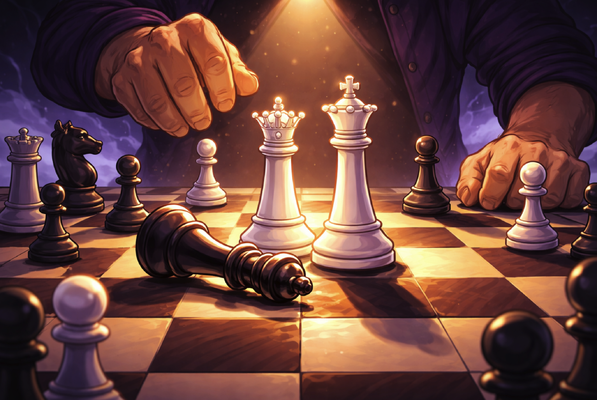
And perhaps that is why the most relevant question is not about the quality of the plan, but about the consistency of the decisions that come after. What really defines strategy in organizations: the plan that is built or the consistency of the decisions that are sustained over time?